Do You Have a Cold or the Flu?
Both have similar symptoms but flu is more severe

Both have similar symptoms but flu is more severe
Could that tickle in the back of your throat mean you’re coming down with the flu or is it just a common cold? It’s a common question during fall and winter, when respiratory viruses circulate more widely.
This year, the distinction could matter more than usual. Flu activity is climbing sharply across the country and is projected to rise in San Diego County, which may lead to more doctor visits, hospitalizations and added strain on health care systems.
Both the common cold and the flu are caused by viruses, and early symptoms can overlap, making them hard to tell apart at first. But the flu tends to be more intense — and potentially more dangerous —especially for older adults, young children and people with chronic conditions.
“I’ve had people tell me that they’ve had the flu and it wasn’t that bad,” says Mark Shalauta, MD, a family medicine specialist at Scripps Clinic. “Those people probably didn’t have influenza. It feels like you’ve been hit by a bus and once you’ve had it, you know how different it is from a cold.”
Common cold symptoms
The common cold mainly affects the nose and throat. Symptoms often include:
- Runny or stuffy nose
- Sneezing
- Mild sore throat
- Mild cough
Unlike the flu, colds rarely cause fever, body aches or extreme fatigue. Symptoms usually improve withing about a week. Treatment focuses on rest, fluids and symptom relief.
Flu symptoms and severity
Flu symptoms tend to appear suddenly and are usually more severe. They may include:
- High fever
- Body and muscle aches
- Extreme fatigue
- Cough and sore throat
- Headache
This flu season is shaping up to be more severe than last year, with cases and hospitalizations rising faster than they did at the same point in the previous flu season.
While people of all ages can get the flu, the most severe cases occur mainly in adults 65 and older.
Many people recover at home, but the flu can lead to serious complications, including pneumonia, worsening of chronic conditions and hospitalization.
If flu symptoms persist, worsen or interfere with daily functioning, seek medical care promptly.
Medication and home remedies
Finding the right treatment can help ease symptoms and support recovery. Over-the-counter medications and home remedies may help, including:
- Acetaminophen (Tylenol) for reducing flu fever and muscle aches
- Cough suppressants to ease persistent cough
- Decongestants to clear nasal congestion
- Humidifiers to reduce dryness and ease breathing
Always follow the dosing instructions carefully for medications. If you’re not sure what’s safe for you, check with your doctor or pharmacist.
Rest and hydration
Rest is essential when recovering from any respiratory illness. Sleep and reduced activity give your body time to fight infection.
Hydration is equally important. Drinking water, herbal teas and broth-based soups helps keep mucus thin, supports circulation and prevents dehydration.
Prevention: vaccines and healthy habits
Prevention remains the most effective way to reduce flu risk, especially during a season with high flu activity and relatively low vaccination rates.
Simple steps include:
- Get a flu shot every year
- Wash hands often
- Cover coughs and sneezes
- Stay home when sick
- Clean frequently touched surfaces
- Eat well and stay physically active
Getting the flu vaccine is one of the best ways to protect yourself and others.
“When my patients are skeptical about getting the vaccine, I remind them that it’s still the best protection we have,” notes Dr. Shalauta. “It takes about two weeks for the vaccination to build up enough antibodies for it to be effective.”
Even when the vaccine is not a perfect match, it significantly reduces the risk of severe illness, hospitalization and death.
Doctors recommend the flu vaccine for everyone 6 months and older and it can still be beneficial even later in the season.
When to see a doctor
Sometimes, a cold or flu can become more serious. It’s important to know when to seek medical help.
Seek medical care promptly if you experience:
- Trouble breathing or chest pain
- A high fever lasting more than three days
- Severe weakness or confusion
- Persistent vomiting or dizziness
- Symptoms that worsen instead of improve
Young children, older adults, pregnant women and those with chronic medical conditions should seek care early if flu symptoms develop.
Flu vaccines at Scripps
The flu vaccine is widely available across San Diego County, including at Scripps:
- Scripps patients can receive the flu vaccine during routine primary care visits.
- Walk-in flu vaccines are offered at Scripps HealthExpress locations for everyone.
Scripps patients can schedule through the MyScripps portal or call their primary care office. Those without a MyScripps account can call 858-533-8263 for flu vaccination information.
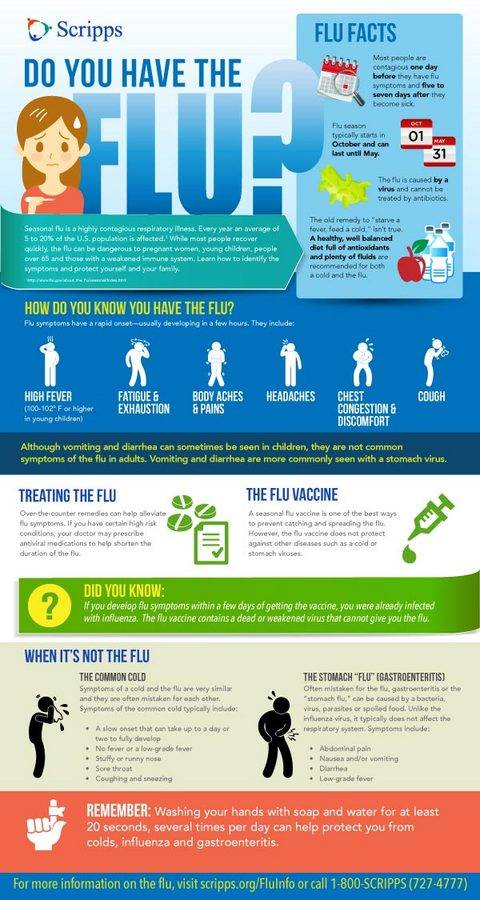
Download the flu infographic. (PDF, 1.7 MB)